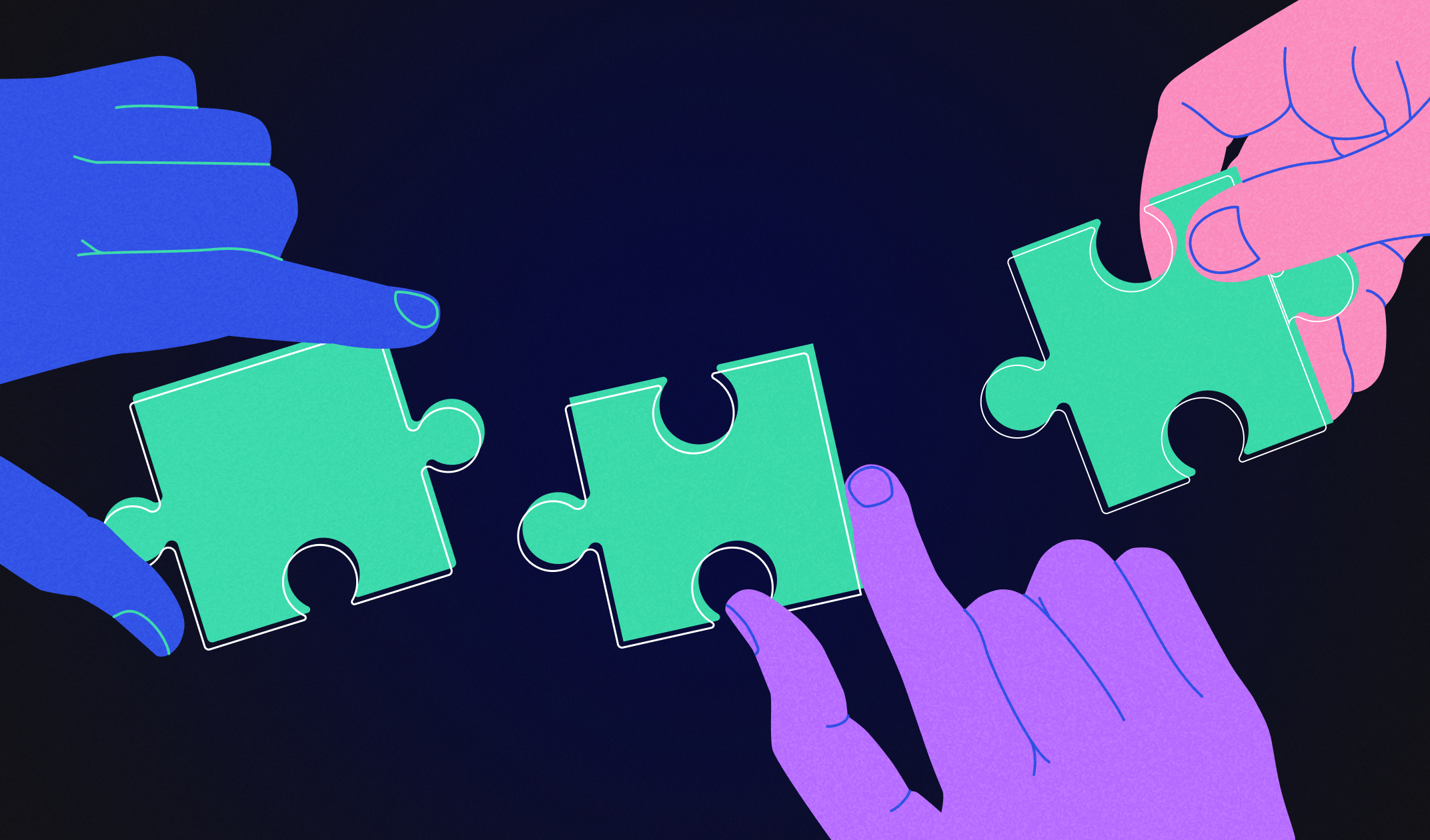
Enterprise WordPress Projects Fail When Internal Teams Get Sidelined
Most enterprise digital transformations fail because the delivery model creates dependency instead of capability. The agency builds. The client observes. The platform launches. Then the internal team inherits a system they did not help shape, do not fully understand, and cannot confidently evolve.
That is not transformation. That is outsourced implementation.
For complex digital ecosystems, especially in higher education, nonprofits, media, publishing, and event-driven organizations, long-term success depends on operational ownership, governance alignment, and internal enablement.
That is why co-building matters.
What Co-Building Actually Means
“Co-building” is often used loosely in agency marketing.
In practice, true co-building means shared decision-making, transparent delivery processes, embedded collaboration, operational enablement, and progressive ownership transfer.
The goal is not simply to deliver a platform. The goal is to help organizations build the operational maturity required to sustain and evolve that platform long after launch.
That matters because enterprise ecosystems are never static. Governance evolves. Teams change. Campaign priorities shift. Integrations expand. Editorial operations mature. Internal stakeholders rotate.
Internal teams need confidence and operational ownership from the beginning.
Transparent Estimation Builds Trust Early
One of the biggest sources of enterprise project friction is estimation opacity.
Stakeholders hear vague ranges, shifting scopes, or unexplained change orders. Especially in nonprofits, universities, and complex enterprise organizations, that uncertainty creates organizational anxiety almost immediately.
Transparent estimation changes the dynamic. A mature co-building process surfaces assumptions early and makes tradeoffs visible throughout delivery. Internal teams understand where uncertainty exists, what dependencies could affect timelines, and how scope decisions are being evaluated. Instead of treating estimation as a procurement exercise, collaborative teams treat it as a governance conversation.
That means maintaining shared visibility into:
- priorities
- backlog decisions
- delivery assumptions
- capacity constraints
- change-control processes
The objective is building trust through clarity.
Sprint Rituals Create Organizational Alignment
Large ecosystem projects rarely fail because teams are not working hard enough. They fail because teams drift out of alignment.
This is where sprint rituals become operationally important. Not performative agile theater, but real collaboration structures that keep distributed stakeholders connected to decisions, priorities, and delivery progress.
In healthy co-building environments, sprint planning is collaborative rather than isolated inside the agency. Internal teams participate directly in roadmap discussions, governance tradeoffs, and prioritization decisions. Weekly reviews create visibility across leadership, marketing, engineering, and operations teams. Working demos reduce assumption drift and surface governance concerns early instead of late in the process. Retrospectives matter too. Enterprise ecosystems evolve continuously, and delivery processes need to evolve alongside them. Teams need mechanisms for improving communication, refining workflows, and adapting governance structures as complexity grows.
The result is not only delivery velocity, but also organizational alignment.
Knowledge Transfer Cannot Be an Afterthought
Many enterprise platforms become fragile because knowledge remains concentrated inside the agency. That creates operational dependency, slower iteration cycles, governance bottlenecks, and long-term maintenance risk.
Healthy co-building models distribute knowledge continuously throughout the engagement instead of delaying it until handoff. Editorial teams learn governance standards while the platform is still being built. Internal developers participate in implementation discussions and architecture reviews. Documentation evolves alongside the system instead of appearing at the end as a rushed deliverable.
This includes:
- architecture decisions
- deployment workflows
- integration standards
- accessibility practices
- component systems
- governance playbooks
The most effective partnerships also create paired collaboration opportunities where internal developers and agency teams solve problems together in real time. That approach builds institutional capability, not institutional reliance.
The Post-Launch Ownership Model Matters More Than Launch
Most agencies optimize for launch. Complex organizations optimize for sustainability.
The real test of an ecosystem comes after staffing changes, during campaign pressure, and through evolving organization priorities. A mature ownership model accounts for that reality from the beginning.
Instead of positioning the agency as a permanent gatekeeper, strong co-building models establish shared governance structures across marketing, engineering, content, accessibility, analytics, and platform operations.
Teams understand who owns decisions, how changes are approved, when architectural review is required, and how technical debt is evaluated. Roadmaps continue evolving intentionally after launch instead of reacting to emergencies.The agency remains involved strategically, but the organization becomes increasingly self-sufficient operationally. That distinction matters culturally.
Why Co-Building Creates a Different Kind of Partnership
Many enterprise agencies are technically excellent, but co-building also requires a transparent process and open collaboration. This is especially true in higher education, nonprofits, research institutions, and distributed enterprises where long-term operational continuity matters more than launch-day polish. The difference becomes especially visible in how delivery models are structured over time.
| Traditional Agency Model | Co-Building Model |
| Agency owns most delivery decisions | Decisions shared with internal teams |
| Estimation happens behind closed doors | Priorities, tradeoffs, and assumptions stay visible |
| Client teams primarily review deliverables | Client teams participate in delivery and governance |
| Knowledge transfer happens near handoff | Knowledge transfer happens continuously |
| Documentation delivered at the end | Documentation evolves throughout the engagement |
| Launch is treated as project completion | Launch is treated as the start of ecosystem evolution |
| Agency dependency often increases over time | Internal operational capability grows over time |
| Governance handled externally | Governance embedded collaboratively |
Co-Building Is Really About Risk Reduction
At enterprise scale, co-building is not just a cultural preference, but also a governance strategy. Organizations reduce long-term risk when institutional knowledge is distributed, decision-making is transparent, governance is collaborative, and operational ownership is shared intentionally across teams.
This creates healthier ecosystems, faster iteration cycles, more resilient internal teams, and lower dependency risk over time. In complex digital ecosystems, those outcomes matter far more than launch-day aesthetics alone.
The Future of Enterprise Delivery Is Collaborative
The traditional agency model treats clients as stakeholders. Modern ecosystem delivery treats them as operational partners. That shift is becoming increasingly important as organizations manage multisite governance, integrated platforms, accessibility requirements, distributed editorial teams, and continuous digital evolution.
The most successful enterprise ecosystems are not built for internal teams. They are built with them.
Lead Form Block TitleReady to Co-Build Something Built to Last?
If your organization is managing a complex digital ecosystem, you may need more than a traditional “handoff” agency model.
We work alongside internal teams to co-build scalable WordPress ecosystems that are easier to govern, evolve, and sustain over time.
Contact us to start a conversation about your platform, your team, and where you’re trying to go next.